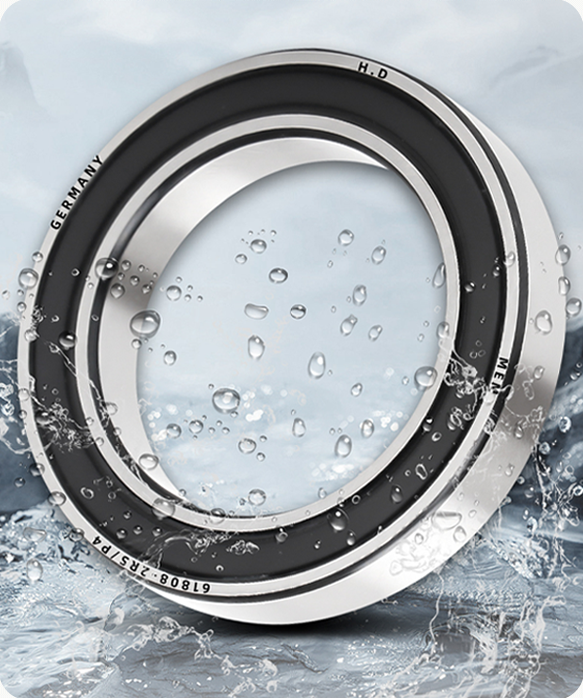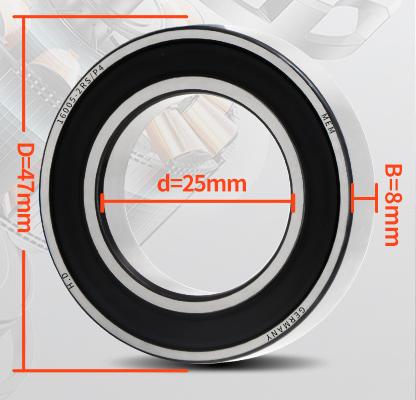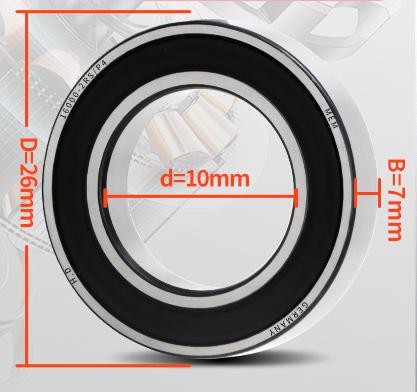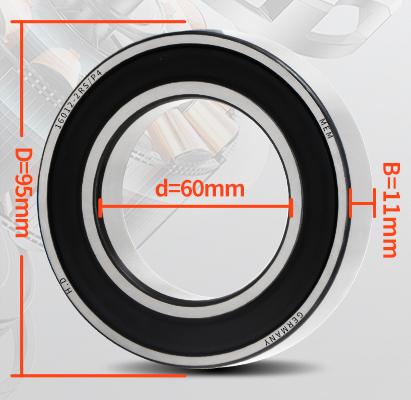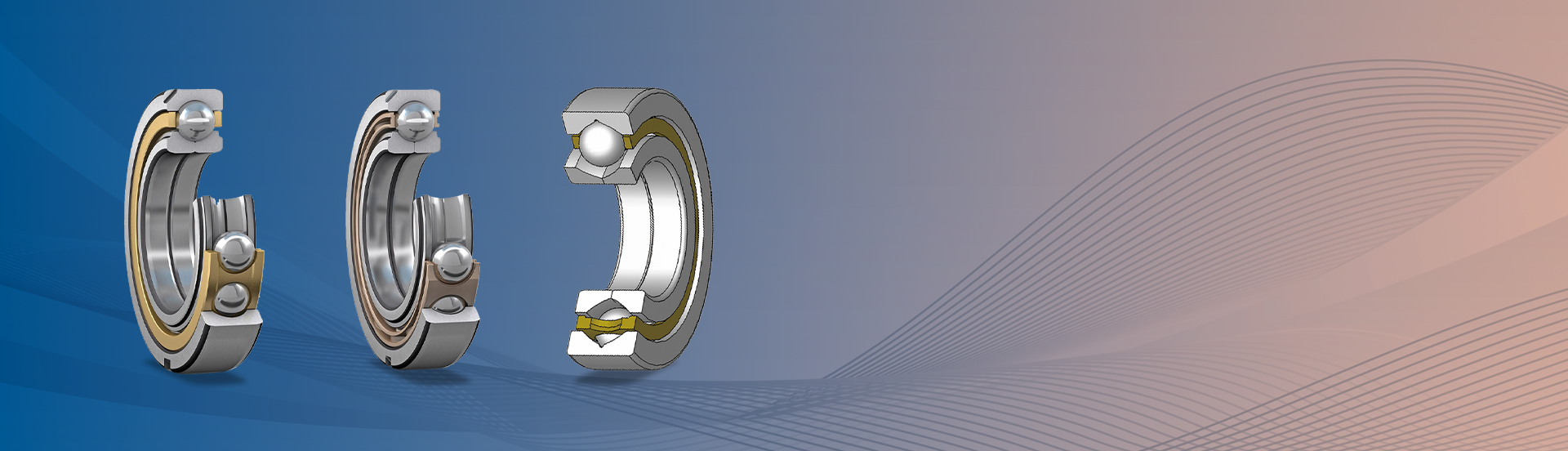
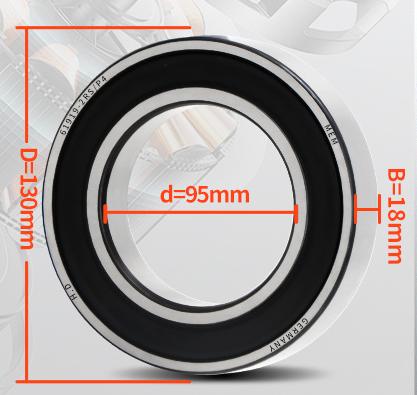
1.Main features: Thin-walled design: The thickness of the inner and outer rings is significantly reduced, saving space and suitable for lightweight and compact structures (such as robot joints, medical equipment). Rubber components: Shock absorption and noise reduction: The rubber layer absorbs vibration and shock, making it suitable for high-dynamic or precision applications. Insulation performance: Prevents current corrosion and is suitable for motors or electronic devices. Compensation misalignment: The elasticity of rubber can tolerate minor installation deviations. Light-load capacity: Suitable for medium and low-speed, light-load scenarios, and does not replace heavy-load bearings.
2. Common structural types: Rubber-coated outer ring bearings: The outer surface of the outer ring is covered with rubber, which directly fits the housing in an interference fit, simplifying installation (such as SKF's rubber-coated bearings). Rubber-lined bearings: Rubber rings are embedded between the inner and outer rings, providing higher elasticity (such as NSK's EF series). Bearings with rubber sealing rings: The sealing rings are made of rubber materials (such as NBR or FKM), which are dust-proof and assist in shock absorption.
3. Typical application fields of robots: Reducing vibration in joint parts and improving motion accuracy (such as collaborative robots). Medical equipment: Avoid metal noise and static electricity interference in MRI equipment and surgical instruments. The motor bearings of household appliances such as washing machines and vacuum cleaners reduce noise. Automotive electronics: Insulation requirements in steering systems and sensors.
4. Main brands and series SKF: Thin-walled bearings with rubber coating (such as W63800 series), the rubber layer on the outer ring is convenient for pressing and installation. NSK: EF Series: Built-in rubber gasket, suitable for small motors. IKO: CRBS Series: Ultra-thin wall design, rubber-reinforced seal is optional. Domestic substitution: LYC (Luoyang Bearing) and C&U (Renben) offer thin-walled bearings with similar rubber coatings, which are cost-effective.
5. Selection Considerations: Rubber material: Select based on the environment (such as NBR oil-resistant, FKM high-temperature resistant). Load and rotational speed: The rubber layer may limit the load-bearing capacity. Dynamic/static load parameters need to be verified. Installation method: Rubber-coated bearings are mostly fitted by pressing to avoid damage from knocking. Temperature limit: Rubber is typically suitable for temperatures ranging from -40°C to +120° C. Special treatment is required in high-temperature environments.
6. Maintenance and Lifespan: Avoid contact with chemicals: Rubber is prone to corrosion by acids, alkalis or solvents. Regular inspection: After rubber ages, its shock absorption effect declines and it needs to be replaced. Lubrication compatibility: If it is an open design, it is necessary to confirm that the grease is compatible with rubber materials (such as lithium-based grease).